
Mise En Scene - "Everything in the frame" !
- Liam Norris

- Oct 6, 2020
- 4 min read
Updated: Oct 13, 2020
The different areas of Mis En Scene include:
Lighting
Setting
Props
Hair
Makeup
Body Language
Expressions
Casting
Setting
This usually gives the audience an idea where and when the film took place.
Costume
Costumes are very important when it comes to mise en scene as they suggest a time period for the film.
Hair
Hair is also another important factor to mise en scene as it tells the audience what type of person that character is. Hair can also indicate what time period that the film is set in.
Makeup
Makeup is a crucial part of mise en scene as it can help with special effects For example, in the film "The Dressmaker", Judi Dench is portrayed as an old and withered woman with the of makeup
Props
Props are used in film to add subtle information that might help the audience understand the film/characters in a better way. Props can also be used to explain a time period such as an old fashioned car or old fashioned clothing.
Lighting
The main feature of lighting is to fit in with the genre of the film. For example, Bright lighting is used in films such as romantic comedies whilst dark lighting is used in thriller/horror films. Bright lighting in films can also suggest something being revealed to the audience e.g a light at the end of the tunnel. Dark lighting can be used to hide something from the audience to create more anxiety or fascination, Such as a monster hiding in the dark, or something missing.
Body Language / Expressions
Body language and face/body expressions tell the story of the film in a better way and helps create a more understanding atmosphere.
In today's lesson, we are taking screenshots from two films of our choice and explaining the mis en scene in each image. The two films that I have chosen to analyse are 'Charlie and the chocolate factory' (2005) and Hunger Games (2012).
Charlie and the chocolate factory (2005)
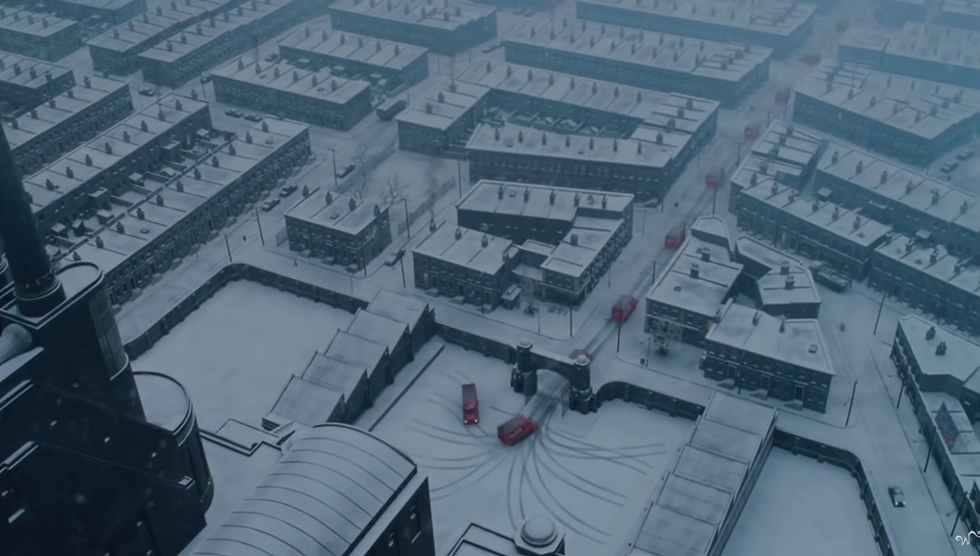
In the opening scene, the camera zooms out into a birds eye view as we can see a group of wonka trucks possibly delivering chocolate to people of the town. We as the audience can can tell that the town is in winter season as the road/tracks are covered in snow. The lighting in this picture is an example of desaturation as the only colours we can see are white and dark grey which create a depressing and boring atmosphere.

2. In this scene, the protoganist Charlie Bucket (Freddie Highmore) runs home to see his family. As we can tell by Charlie's house, he is clearly very poor and a working class citizen due to the fact that his house is small and almost rundown. This gives the audience a feeling of sympathy towards Charlie and makes them want something good to happen to him. Charlie's house could be a good reason to why he is the main character, due to the fact that the house stands out from the crowd.

3. As we can see in the picture, the camera angle is very distorted almost suggesting how compressed Charlie's house is and also how there's no space for Charlie's grandparents as all 4 of them have to share a bed downstairs. Due to the fact that Charlie's house and clothing is very dull and almost dirty looking indicates how he and his family are poor working class citizens.

4. In this scene, Willy Wonka opens the factory doors and surprises all the kids and parents with his extremely colourful and magical factory. The bright colours used in this picture are an example of over-saturation, which is a massive contrast to the dull and grey winter weather outside. this helps the audience understand that the film is a fantasy genre due to the unrealistic and on the edge of reality props/atmosphere.
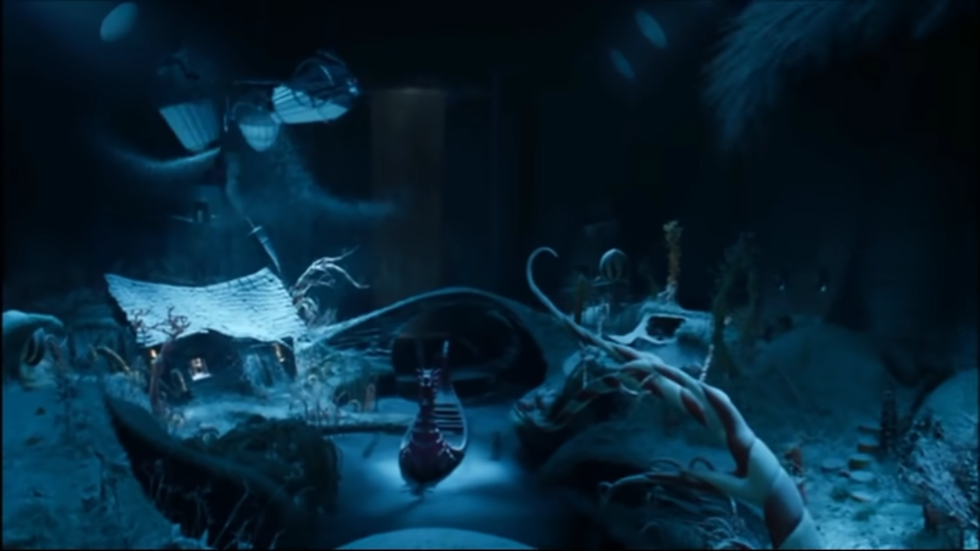
5. In the end, Charlie gets what he deserves and wins the trip, he ends up merging his house in the factory which could indicate a dream come true to Charlie as he no longer has to worry about being poor. The film finishes on a happy ending.
Hunger Games (2012 - 2015)

In the opening scene, the camera gives us an establishing shot of the antagonist Katniss Everdeen (Jennifer Lawence) volunteering as a tribute to participate in the 74th annual 'Hunger Games', which is a battle royal of death that involves two people from 12 different districts fighting for justice. In the film, it mentions the fact that Katniss Everdeen lives in District 12 which is the mining district and is clearly a working class district as all the young adults are wearing dirty and almost old fashioned clothing simply indicating that they do not have a lot of money. In addition, the grey lighting in this shot could suggest how surpressed and gloomy District 12 is.

2. In this scene, the camera uses an over the shoulder angle to show Katniss training for the hunger games by using a bow and arrow as a weapon. We as the audience now find out that this film is going to be an action film due to the use of weaponry.

3. In this scene, the camera uses a birds eye view to show the tributes running into 'The Cornucopia' (a cave filled with all types of weapons). As we can see, the tributes are landed in the middle of nowhere which creates a feeling of anxiety for the audience as they have no idea what to expect and hope that Katniss survives and wins for her district.

4. In this scene, the camera uses a close up angle as Katniss grabs a backpack and runs away from 'The Cornucopia'. Looking at Katniss's face, you can tell that what she is experiencing is quite traumatic as everywhere she looks, someone is getting killed.

5. In this scene, the camera uses a Two-Shot angle to show Katniss and her fellow tribute Peeta Mallark (Josh Hutcherson) staring into each other's eyes as they realise that they have won the 74th annual 'Hunger Games' this improves their love connection with each other. In the picture, we notice that the background is blurred out from the two characters, this draws attention to Katniss and Peeta as it highlights an important event.


Comments