
Photography Blog 5 - History of photography

Updated: Dec 14, 2020
William Henry Fox 1834

William Henry Fox Talbot was a key figure in the history of photography. he invented early photographic processes and established the basic principle of photography as a negative/positive process.
In 1834, which was five years before the public announcement of the daguerreotype, William developed a process which produced a negative image on sensitized paper. The negative could then be used to create multiple positive photographs by contact printing. This photograph, which was taken in August 1835, is the earliest known surviving negative picture.
In September 1840, Talbot made a further vital breakthrough when he discovered that invisible, (or ‘latent’) images were formed on sensitized paper even after short exposure times. These images could be made visible, or ‘developed’, if treated with chemicals. By inventing the processes needed to make latent images visible and ‘fix’ them to stop them from fading, Talbot made the future development of photography possible.
2. Lewis Carroll 1860
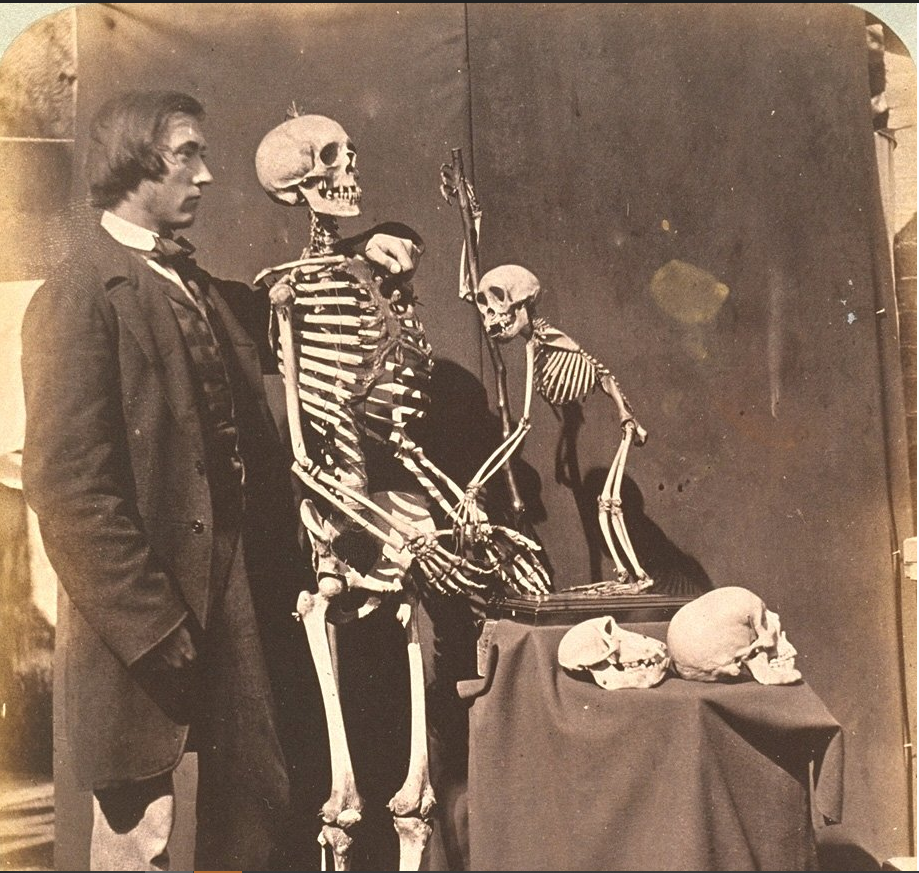
Lewis Carrol (1832 - 1898) was known primarily as the author of Alice’s Adventures in Wonderland (1865) and Through the Looking-Glass (1872)
Lewis Carroll was also a mathematics lecturer at Oxford University, a Deacon at Christ Church Cathedral, Oxford and an accomplished photographer. Carroll, christened Charles Lutwidge Dodgson, practiced photography for over 25 years and photographed hundreds of sitters in his Oxford studio. This image highlights Carroll's great friend and photography teacher Reginald Southey holding a human and monkey skeletons and skulls. It appears to be referencing to the debates regarding Darwinism and theories of evolution which was raging at Oxford at the time. It may perhaps suggest Southey's intellectual position
Carroll was a fine photographer whose skills were respected among his circle and beyond. His creativity was particularly evident in his composition and camera angles. Along with his technical skill, it resulted in the production of many striking photographs, particularly during the 1860s. Carroll’s preferred photographic genre was portraiture, and he is noted for his careful poses and groupings. His favorite subjects were children—in particular girls, whom he photographed regularly, sometimes in costume and sometimes naked. Many questions and concerns have been raised regarding these photographs.
3. Thomas Annan 1868 - 1871
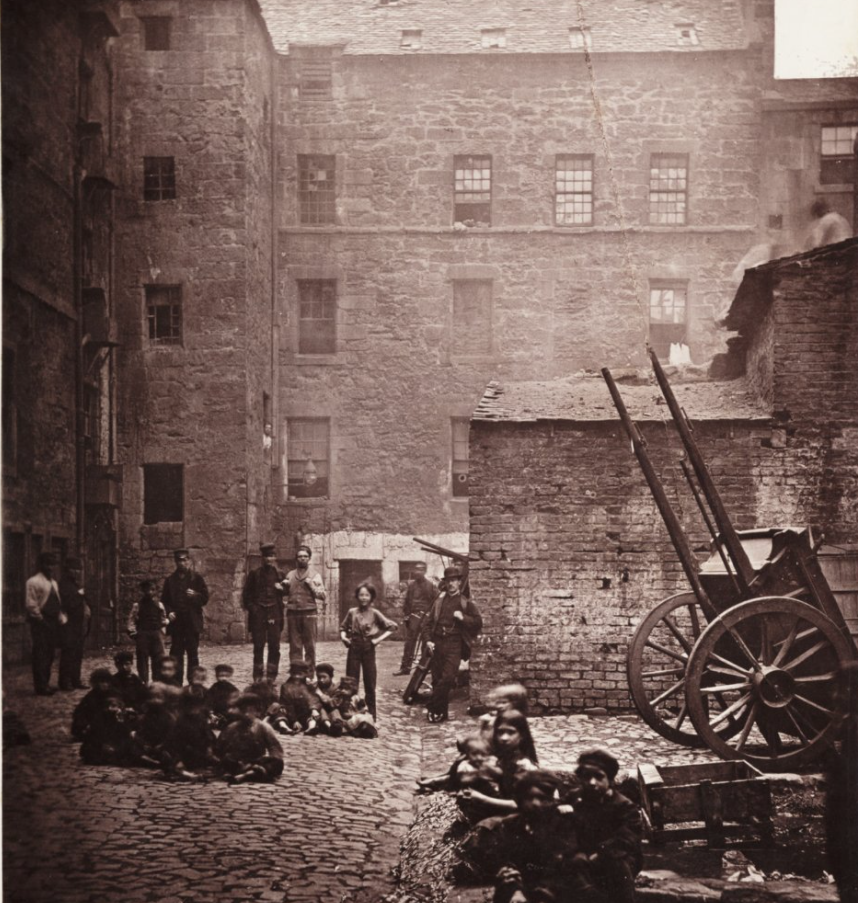
Thomas Annan (1829–1887) is best known for his photographs of Glasgow’s slums. His striking and often moving images, produced between 1868 and 1871, were made at the request of the City of Glasgow council, who commissioned Annan to make a record of the housing conditions in the old town prior to their demolition as part of an urban improvement scheme.
Widely regarded as the first photographs of inner city slums, Annan’s photographs were indicative of a growing public concern for the poor and dispossessed in society.
Recognition of the need for reform to help tackle the disease and ill health caused by overcrowding and insanitary living conditions in the cities was increasing, although it would not be properly addressed until the Public Health Act of 1875.
4. George Rodger 1949
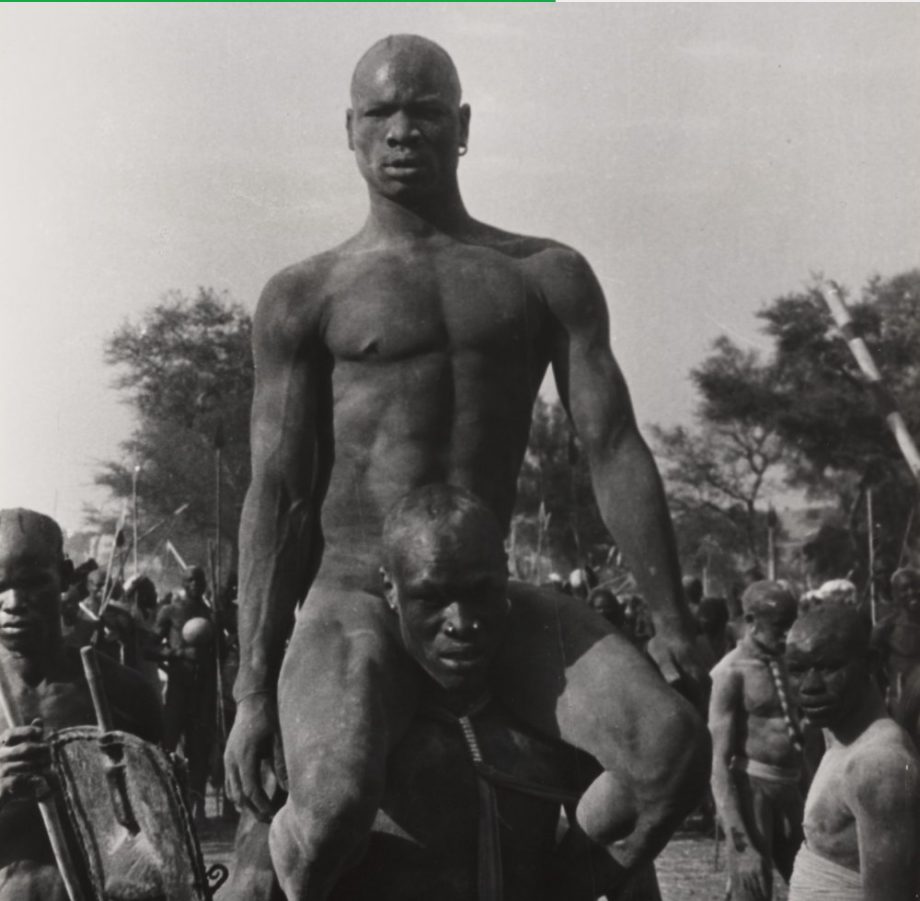
British photojournalist George Rodger (1908–1995) is known primarily for his shocking photographs of Bergen-Belsen concentration camp, and for his role in the establishment of the influential agency Magnum Photos.
Rodger is also recognized for the photographs he took in Africa in the years immediately after the Second World War. This photograph of two wrestlers was taken in the Nuba Mountains in Kordofan, central Sudan, while Rodger was working for National Geographic magazine.
In 1949, Rodger produced a large and unique documentary project, of which this image is a part. After a difficult journey to the remote, hard-to-find Nuba, he lived among the tribespeople for six weeks, photographing their daily lives, rituals and routines. The project proved controversial: Rodger’s photographs ultimately brought the tribespeople unwelcome attention that eventually destroyed their traditional way of life.
5. Dr Harnold Edgerton 1990

Dr Harold Edgerton (1903–1990) is famous for his split-second photographs, which reveal actions that are too fast for the human eye to see.
Edgerton was the first photographer to use stroboscopic lighting to capture rapid movement. He became famous for his dramatic photographs of falling milk drops and speeding bullets. He found that the stroboscope could illuminate a subject through repeated and rapid bursts of light. His photographs presented views of high-speed motion for the first time and became popular with the public.
6. Martin Parr 1986
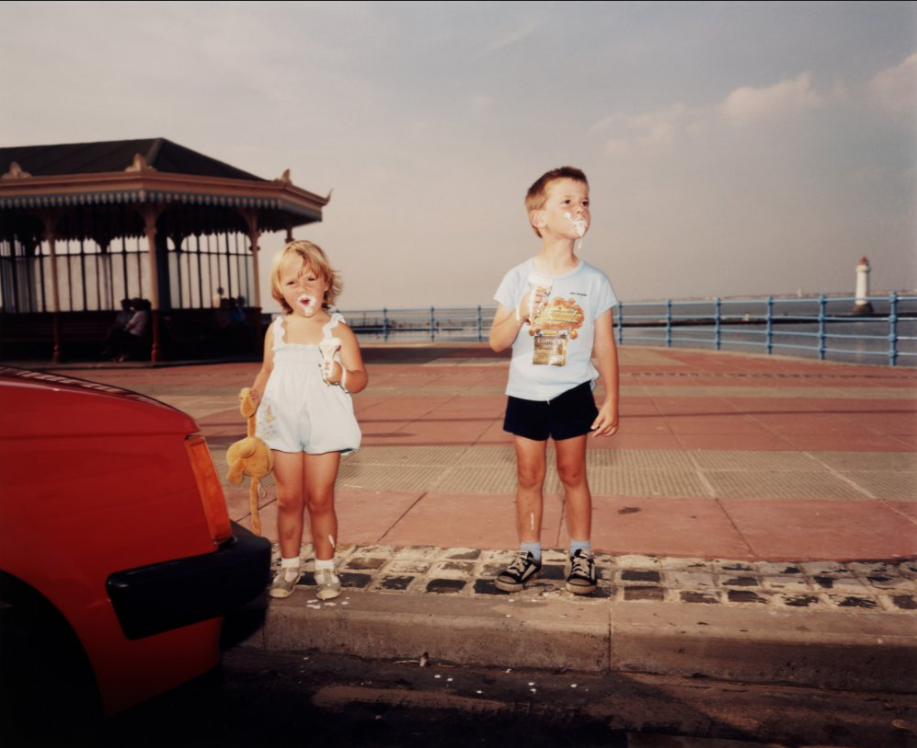
British photographer Martin Parr (1952–) is one of the most significant artists in the modern history of photography. His extensive body of work has brought him fame and made a deep impression on those who have followed in his wake.
Parr is famous for his unorthodox, often humorous style and his interest in mass tourism, consumerism and globalization. His work is frequently perceived as being critical of England and the English and as such is often received with ambivalence, regardless of its impact on the medium and obvious quality.
A member of Magnum Photos, Parr works with brash colour to portray a world apparently full of vulgarity and wastefulness. His first large-scale project was The Last Resort, a series of photographs of the run-down seaside resort of New Brighton on the Wirral. Published as a book in 1986 and exhibited widely, The Last Resort became notorious for its shocking, garishly colourful portrayal of modern society.
The Last Resort is an uncompromising project that turned an unforgiving spotlight on Thatcher’s Britain and prompted questions about the depth of the divides within British society. This photograph, drawn from the series, shows two small children with ice creams dribbling down their hands, faces and clothes. Their messy appearance implies careless and neglectful parenting, further emphasized by the way they’re positioned alone on the kerb.
7. Richard Billingham 1996
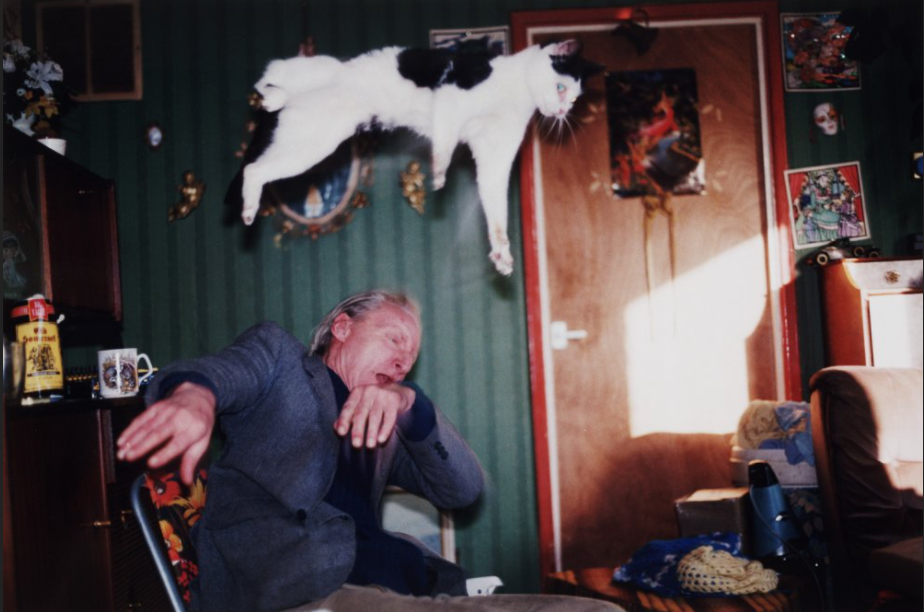
Richard Billingham (1970–) was born in Birmingham. His breakthrough came following the publication of photographs he took of his family, who lived in a tower block in the city. The book Ray’s a Laugh (1996) depicted the chaotic lives of Billingham’s alcoholic father Ray, mother Liz and younger brother Jason.
The garishly-coloured, badly-focused photographs were shot on a cheap 35mm camera. They were made originally as studies for paintings while Billingham was studying fine art at the University of Sunderland. Reminiscent of family snapshots, the remarkably frank images depict a life of poverty but are tempered by moments of intimacy between Liz and Ray. In this photograph, which is humorous, desperate and cruel, Ray is seen throwing the family’s pet cat across the room.
Part photo-diary and part documentary, Ray’s a Laugh has received international acclaim and notoriety. It has been exhibited at many venues, including at this museum in 1996, and was part of the famous Sensation exhibition at the Royal Academy of Arts in 1997. Billingham won the prestigious Citibank Photography Prize in 1997 and was shortlisted for the Turner prize in 2001.
8.
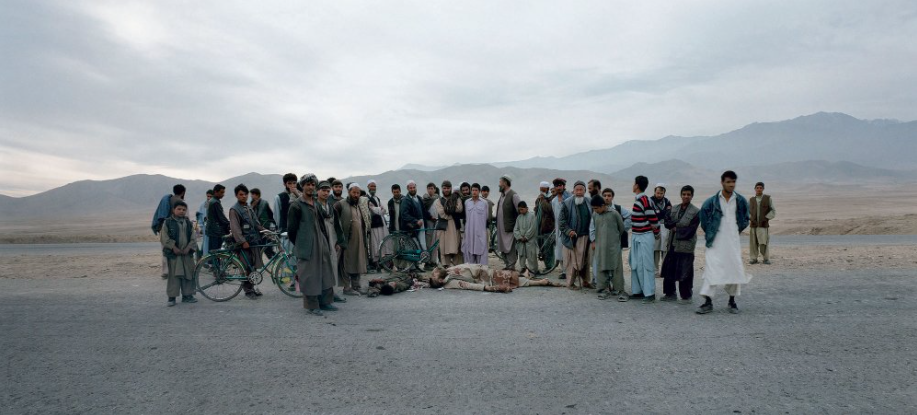
Luc Delahaye (1962–) is known primarily for his series of photographs History. Representing sites of war and their aftermath, "History" is a series of monumentally-sized panoramic photographs that use painterly conventions to present subject matter typically associated with photojournalism.
Created with a panoramic camera and reproduced on a grand scale, these precise, detailed images exude a formality and gravitas normally only associated with paintings. Part of their resonance results from their ability to provide a view of war that differs significantly from the usual images created by the mainstream media, as this image demonstrates.



Comments